
You Can Just Ask
Guests are often reluctant to ask for things. If you want to stay longer somewhere, go somewhere else, eat earlier, turn the music off, or head back early, say so. It is your charter and the crew would far rather be told.

What a day on a private charter is actually like, hour by hour, without the marketing gloss.
A large share of our guests have never been on a private yacht. They have been on a ferry, or a scheduled snorkel boat, or a cruise ship, and they arrive not quite knowing what the day involves or how to behave. That is completely normal, and this page exists to remove the guesswork.
The short version: it is far less formal than people expect. There is no dress code, no schedule you are expected to keep up with, and no performance. The crew are working professionals rather than entertainers, and the day belongs to you.
You arrive at the agreed time and the crew meet you at the boarding gate. There is no check in queue and no ticketing. Shoes come off at the passerelle on most yachts, and someone will take your bag. The captain will usually introduce himself and run through the plan for the day, and this is the moment to say what you actually want, including if that is nothing in particular.
The first twenty minutes are through Nassau harbour, which is busy and not especially scenic. Guests often stay on the aft deck for this part. Once past the harbour entrance the water changes colour noticeably, and that is usually when people move forward.
Typically forty minutes out, somewhere sheltered. The crew will set out the swim ladder and bring up snorkeling equipment. There is no obligation to get in. A reasonable number of guests spend the whole day on deck and enjoy it just as much.
At anchor, not under way. On yachts carrying a chef this is prepared aboard while you are swimming. It is served when you are ready rather than at a fixed time, which surprises people who are used to scheduled tours.
Usually a second stop, often a sandbar if the tide is falling. This is the quiet part of the day and the part guests describe most fondly afterwards. Water toys come out, the music goes on if you want it, and nothing much happens for a couple of hours.
Back toward Nassau in the late afternoon, or staying out for sunset if the charter is timed for it. The run in is usually the quietest part of the day on board.
Guests are often reluctant to ask for things. If you want to stay longer somewhere, go somewhere else, eat earlier, turn the music off, or head back early, say so. It is your charter and the crew would far rather be told.
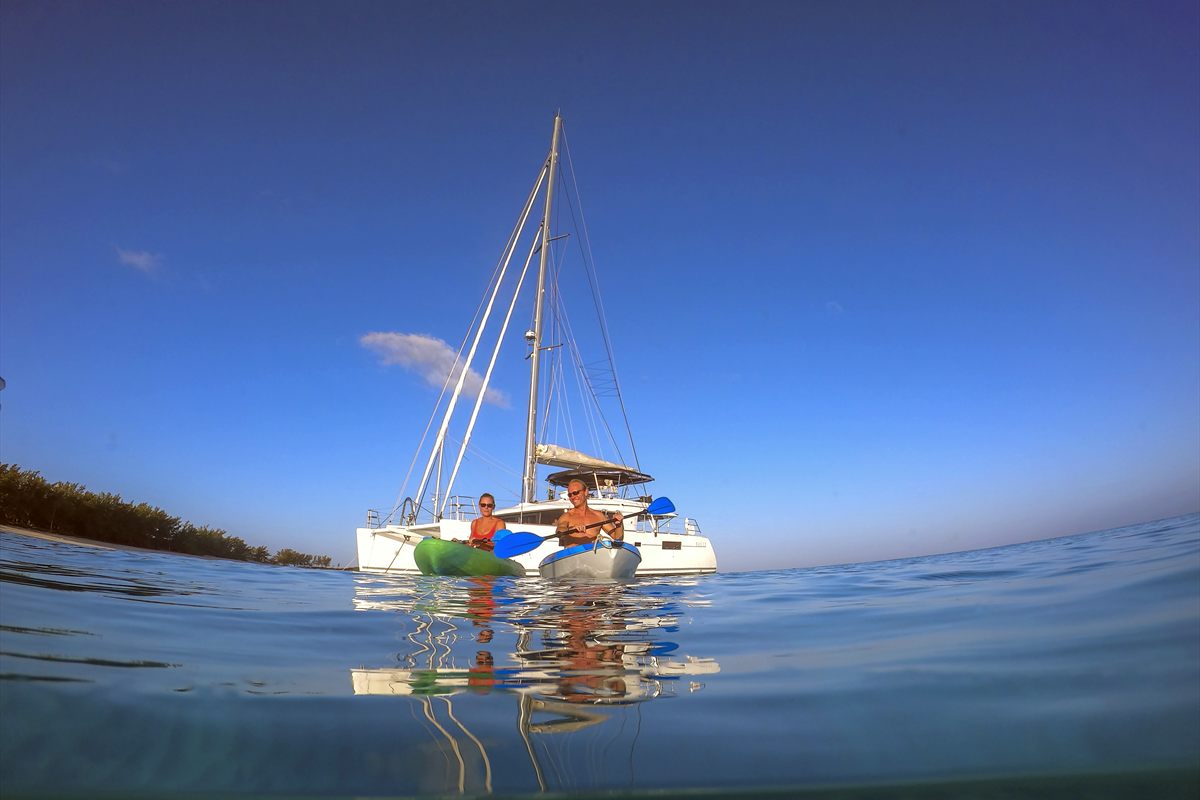
The breeze under way hides how strong the sun is, and the water reflects it back at you. The most common way a charter goes wrong is someone getting badly burnt by mid afternoon. Reapply more often than feels necessary.
None of this is strict, but it makes the day run better.
Less common than people fear on a day charter in sheltered water. If you are prone to it, take something before you board rather than after you feel it, stay on deck rather than below, and look at the horizon. Tell us in advance and it will shape which vessel we recommend, since a large catamaran is far more stable than a smaller monohull. There is more on this in our charter FAQ.
A day charter is an outing. A multi day charter is something else, and the change happens around the second morning. You stop thinking about the schedule, you learn where things are on the boat, and the crew stop being staff and start being the people you are travelling with.
Guests on a week long charter often say the best day was one where nothing was planned. That is worth knowing when you are tempted to fill every day of an itinerary. If you have three days or more, see the three day charter page for how the pace changes.
What actually happens on board, and the things guests are too polite to ask.
The crew meet you at the boarding gate at the agreed time. There is no queue or ticketing. Shoes come off on most yachts, someone will take your bag, and the captain will run through the plan for the day.
No. That is the main difference from a scheduled tour. The route is agreed with the captain and can change during the day if you want to stay somewhere longer or head back early.
Yes, and please do. Guests are often reluctant to ask. If you want to eat earlier, turn the music off, go somewhere else or head in, say so. It is your charter.
Not at all. A reasonable number of guests spend the whole day on deck and enjoy it just as much. There is no expectation either way.
At anchor rather than under way, and when you are ready rather than at a fixed time. On yachts carrying a chef it is prepared on board while you are swimming.
On yachts fitted with a Bluetooth sound system, yes. Not every vessel has one, so ask if it matters to you.
Shoes off on deck, sunscreen before boarding where possible, ask before jumping from anything, and nothing goes over the side. None of it is strict but it makes the day run better.
Tipping is customary but discretionary. Ask us what is normal for the vessel if you are unsure, rather than guessing on the day.
More than it feels like. The breeze under way disguises it and the water reflects it back. The most common way a charter goes wrong is someone getting badly burnt by mid afternoon.
On most vessels yes, and on larger yachts and catamarans there is a genuine choice between sun and shade. If shade matters to your group, tell us and it will shape the recommendation.
Crew are used to children aboard. Tell us their ages when you enquire, because it changes which yacht suits you and how the captain plans the swim stops.
Yes, and the change happens around the second morning. You stop thinking about the schedule and start treating the yacht as somewhere you are living. See our three day charter page.
Usually the afternoon sandbar stop, and then the run back in. Guests often describe those as the parts they remember most.
Some groups want music, water toys and constant activity. Others want an anchorage and quiet. Both are easy to arrange, but only if we know which one you are.
The best charters are the ones where guests said what they actually wanted.
Tell us about children, weak swimmers or seasickness when you enquire.