Explore, Snorkeling

Bahamas Snorkeling Guide

Where the reefs are, what the water does through the year, and how snorkeling works from a private yacht.


Why the Bahamas Snorkels Well

Two things make the snorkeling here reliable. The water is shallow over a very large area, so light reaches the bottom and colour holds. And the bank water is filtered through sand rather than carrying river silt, so visibility recovers quickly after weather. On a settled day you can routinely see thirty to sixty feet, and on a very good day considerably more.

Snorkeling from a private yacht is a different experience from a scheduled snorkel tour. You are not tied to one mooring for a fixed hour with forty other people. The captain picks the site on the day based on wind direction and tide, and if the first stop is disappointing you move.

Sites

Where We Take People

Site choice depends on where you are chartering from and how long you have.

Nurse sharks in shallow water beside the dock at Compass Cay

Near Nassau

Reef patches around Rose Island and Green Cay, in shallow protected water. These suit beginners and children well: the depth is forgiving, the current is usually mild, and you can stand up in places. Most half day charters include one of these.
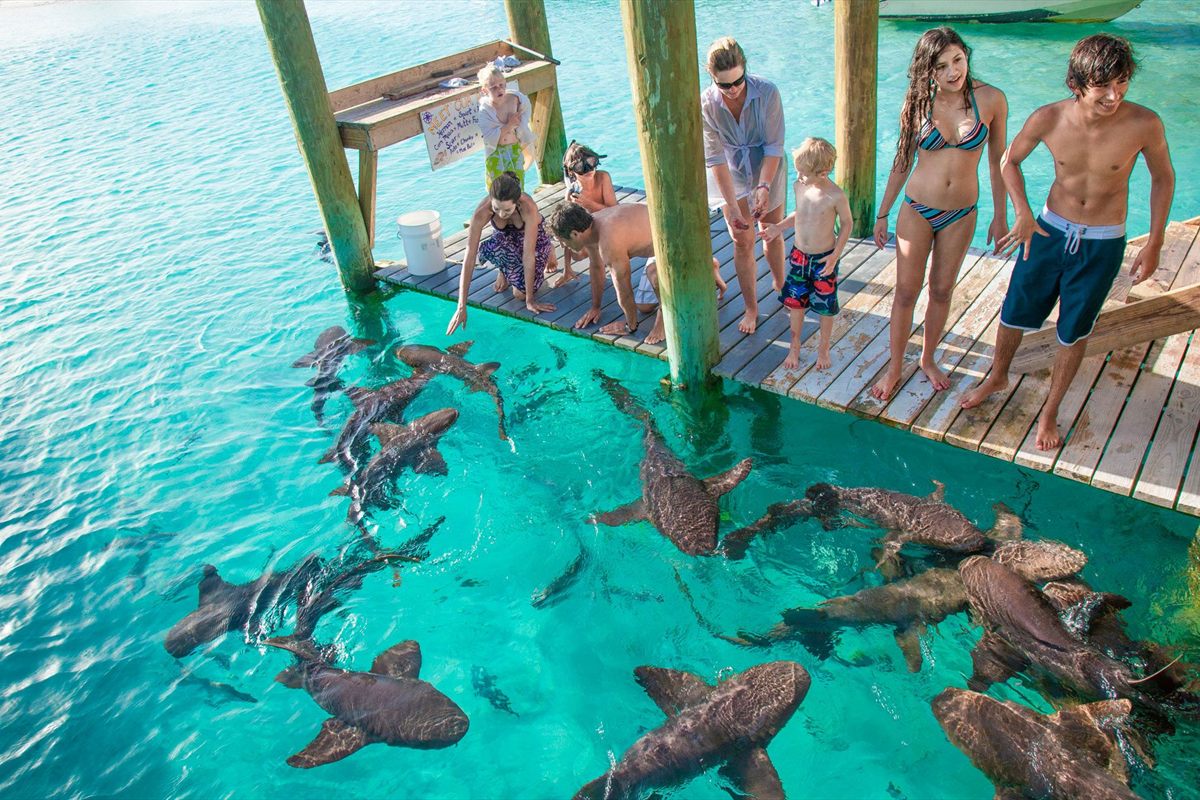
Nurse sharks gathered in clear shallow water beside a dock in the Exumas

The Exumas

Better coral, better fish and better visibility, but it needs a longer charter to reach. The Land and Sea Park is protected, and it shows. Thunderball Grotto at Staniel Cay and the sunken aircraft at Norman's Cay are the two most distinctive stops in the chain.


What You Are Likely to See

On an average reef stop, expect parrotfish, sergeant majors, blue tangs, yellowtail snapper and angelfish. Nurse sharks are common and are not a concern; they are bottom feeders and generally uninterested in people. Southern stingrays turn up on sandy patches. Turtles are seen regularly but not reliably, and anyone who promises you turtles is guessing.

Coral condition varies. Some Bahamian reefs have suffered from bleaching events over the past two decades, as reefs have across the region. The protected areas in the Exumas are in noticeably better shape than the more heavily visited sites near Nassau, which is worth knowing if reef quality is your priority.

Conditions Through the Year

Visibility is generally best from late spring through early autumn, when the water is calm and warm. Winter brings stronger north east winds that stir up the shallows and can make the exposed sites uncomfortable, though sheltered spots still snorkel well. Water temperature runs roughly from the mid seventies in winter to the mid eighties in late summer, so most guests are comfortable without a wetsuit.


Equipment and Ability

Snorkeling equipment is carried on most of our yachts, including masks, snorkels and fins in a range of sizes. Flotation aids are usually available, and if anyone in your group is a weak swimmer tell us in advance so the crew can plan for it.

You do not need to be a strong swimmer to enjoy a reef stop. Crew will put you in at a site suited to the group, and on most charters someone will be in the water with you. If a member of your party would rather stay aboard, the reef stops are also the quietest part of the day on deck.

Two Practical Notes

Reef safe sunscreen is worth bringing. Standard sunscreen contains compounds that damage coral, and applying it immediately before getting in is the worst case.

Do not touch or stand on coral. It is fragile, it is slow to recover, and fire coral will remind you for several days.


Building a Charter Around Snorkeling

If snorkeling is the main reason for your charter, a few things help. Go earlier in the day, when the light is high and the wind has not built. Allow for two stops rather than one, because conditions differ site to site. And give the captain some flexibility on the route rather than fixing it in advance.

A half day charter fits one good reef stop. A full day fits two or three with lunch between them. A multi day charter reaching the Exumas is what to book if you want the best of it. See our charter services for the options.

Snorkeling Questions

Questions About Snorkeling on a Charter

Conditions, equipment, ability and what you are likely to see.

Is snorkeling equipment provided?

Snorkeling equipment is carried on most of our yachts, including masks, snorkels and fins in a range of sizes. Flotation aids are usually available as well.

Do I need to be a strong swimmer?

No. Crew will choose a site suited to the group, and on most charters someone will be in the water with you. If anyone is a weak swimmer, tell us in advance so it can be planned for.

How good is the visibility?

On a settled day you can routinely see thirty to sixty feet, and considerably more on a very good day. The bank water is filtered through sand rather than carrying river silt, so it recovers quickly after weather.

When is visibility best?

Generally from late spring through early autumn, when the water is calm and warm. Winter brings stronger north east winds that stir up the shallows, though sheltered sites still snorkel well.

What will we see?

Parrotfish, sergeant majors, blue tangs, yellowtail snapper and angelfish are common. Nurse sharks and southern stingrays turn up regularly. Turtles are seen often but not reliably, and anyone promising you turtles is guessing.

Are the nurse sharks dangerous?

No. They are bottom feeders and generally uninterested in people. Guests routinely swim near them, and at Compass Cay in the Exumas they gather in the shallows by the dock.

Do we need a wetsuit?

Rarely. Water temperature runs from roughly the mid seventies in winter to the mid eighties in late summer, and most guests are comfortable without one.

Where are the best reefs?

The Exumas, particularly inside the protected Land and Sea Park, are in better condition than the more visited sites near Nassau. Reaching them needs a longer charter. See our Exumas guide.

Can we snorkel near Nassau?

Yes. There are reef patches around Rose Island and Green Cay in shallow protected water, which suit beginners and children well because the depth is forgiving.

How many snorkeling stops fit into a charter?

A half day fits one good stop. A full day fits two or three with lunch between them. Conditions vary between sites, so having more than one planned is worth it.

Should I bring my own equipment?

You are welcome to, particularly if you have a mask that fits you well. Otherwise the yacht will have what you need.

Is reef safe sunscreen necessary?

It is worth bringing. Standard sunscreen contains compounds that damage coral, and applying it immediately before getting in the water is the worst case.

Can we touch the coral?

Please do not. It is fragile and slow to recover, and fire coral will remind you for several days. Standing on it does more damage than most people realise.

Can we scuba dive instead?

We arrange yacht charters rather than dive operations. If diving is a priority, tell us early and we will advise on how to combine it with a charter.

Tell Us Who Is Getting in the Water

Site choice depends a lot on the group. Confident swimmers and small children want different stops. Let us know who is coming and the captain will plan around it.

Snorkeling equipment is carried on most of our yachts at no extra charge.

Calm settled weather gives the best visibility, so flexible dates pay off.